Posts Tagged ‘stepwell’
March 12, 2014 in Delhi Heritage Walks,DHW,Heritage sites in Delhi,Heritage Walks,Mehrauli Archaeological Park,Mehrauli Archaeological Park Heritage Walks,Monuments of Delhi,Walking Tour | Comments (0)
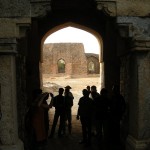
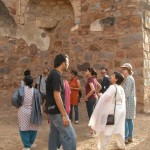
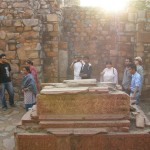
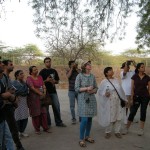
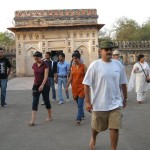
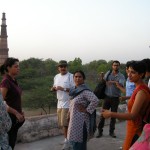
Pictures from Instawalk organised for NatGeo channel for the NatGeo Moment Awards 2014. This event was exclusively for 20 odd people selected for participation by NatGeo. The heritage walk + photography event (thus, the name, Instawalk) was organised at Mehrauli Archaeological Park & was led by our team member, Moby Zachariah. The walking tour included Balban’s tomb, Jamali Kamali Mosque & tomb, Thomas Metcalfe’s estate called Dilkusha & a stepwell called Rajon ki Baoli. The pics are by Kavita Singh, another team member at Delhi Heritage Walks. Thanks all for joining!
July 2, 2013 in Delhi Heritage Walks,DHW,Heritage sites in Delhi,Heritage Walks,Lodi Garden,Lodi Garden Heritage Walks,Monuments of Delhi,Walking Tour | Comments (0)
Located between Safdurjung’s tomb and Khan Market, there lies 90 acres of beautifully landscaped garden which was once a royal burial ground of Sayyid and Lodi royalty. Today, the monuments are surrounded by walking paths and jogging paths with trees, shrubs and flowering plants on both sides. The garden as we see today was designed in 1936 by the British when it was called Lady Willingdon Park. (more…)
March 26, 2012 in Delhi Heritage Walks,DHW,Heritage Walks,Mehrauli Archaeological Park,Mehrauli Archaeological Park Heritage Walks | Comments (3)
The Mehrauli Archaeological Park reflects the changing colours of season. The time around the bougainvillea was in full bloom and lent a splash of bright colour on a landscape which is almost wild. Our heritage walk started from the clearing near the entrance. This patch was recently the site of archaeological excavations. The stone floor, foundations of rooms, graves were some of the things which were revealed. There were many surface finds too: shards of pottery, a clay horse, part of a cheelum (smoking pipe) with soot stuck to it still! Balban’s tomb stands right ahead, one of the most important buildings in India, architecturally speaking. Continue Reading This Post
December 6, 2011 in Delhi Heritage Walks,DHW,Heritage Walks,Mehrauli Archaeological Park,Mehrauli Archaeological Park Heritage Walks | Comments (0)
On the day of separation from you in helplessness and loneliness, nothing consoles us but the sorrow we feel for you.
O Jamali! Resort to the door of the friend, for our refuge is the door of the beloved.
These are verses by poet & traveller, Sheikh Fazlullah, who went by the pen name Jamali. And his name lives on today…the park where our heritage walk was organized is locally known as Jamali Kamali. Officially, the Mehrauli Archaeological Park, very few know it by that name. Our group of 20 odd met at the entrance to the Park and began exploring. The Mehrauli Archaeological Park is a minefield of archaeological remains! Everywhere the eye goes, there are remains of historic settlements, some almost devoured by vegetation. Continue Reading This Post
April 13, 2010 in Delhi Heritage Walks,DHW,Heritage Walks,Mehrauli Archaeological Park,Mehrauli Archaeological Park Heritage Walks | Comments (2)
Mehrauli Archaeological Park is one of the most picturesque sites in Delhi. The area is virtually littered with ruins. Besides the prominent tombs and mosques there are numerous unnamed ruins which were probably part of residential settlements. Crumbling walls and niches are peek out from the surrounding vegetation. Balban’s tomb is the first major monument on the heritage walk. It is an extremely significant building as it is the earliest surviving example of the use of the true arch in construction. The adjacent chamber has a grave which is traditionally believed to be of Balban’s favourite son, Khan Shaheed. Immediately after the tomb is a large area covered with ruins of small rooms which may have been residential units. Only the foundations remain now and we can see that some of these structures might have been double-storeyed. A little ahead is the Jamali Kamali mosque and tomb. This is the monument which gives the area its local name. This is a protected monument under ASI and is now always under lock and key. Continue Reading This Post
Older Posts »